
Wokingham
CEDA Healthcare Private GP Clinic
37 Peach Street, Wokingham, Berkshire, RG40 1XJThe Wokingham clinic is on Peach Street. Ask reception about the most suitable parking and access arrangements before travelling.
Private GP in Wokingham →
Private GP · Wokingham & West Byfleet
A soft swelling over the front of the kneecap is often prepatellar bursitis, also called housemaid's knee. I can assess it, drain it if needed and advise on stopping it coming back, in Wokingham and West Byfleet.
£175 draining or injection · £118 assessment only
Draining (aspiration) is included in the £175 fee. Assessment only means no procedure is done.
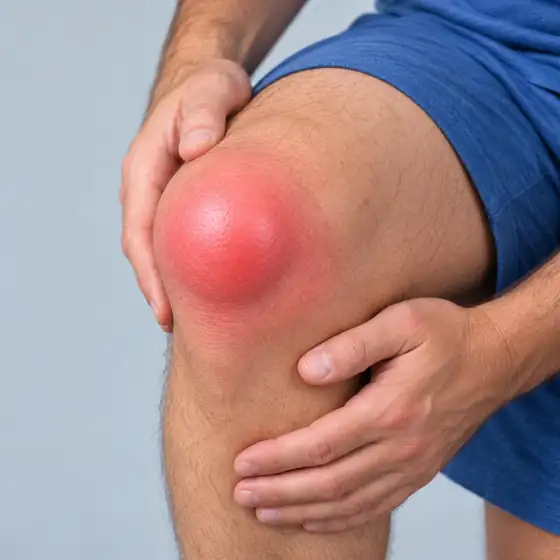
Prepatellar bursitis is a swollen, fluid-filled sac (bursa) on the front of the kneecap. It is often called housemaid’s knee, because it is usually caused by lots of kneeling. Most cases settle within a few weeks if you avoid kneeling on it. If the swelling is large, painful or keeps coming back, I can drain the fluid with a fine needle at the same appointment, and test it if needed.
I see patients at CEDA Healthcare in Wokingham and West Byfleet. Draining costs £175, and an assessment without a procedure is £118.
A bursa is a small cushion of fluid that helps skin glide over bone. The bursa in front of the kneecap can swell after repeated kneeling (common in carpet fitters, plumbers, gardeners and cleaners) or after a knock to the knee. Less often, it becomes infected through a cut or graze, or is caused by gout.
It is different from fluid inside the knee joint. With bursitis the swelling sits on top of the kneecap, and the knee usually still bends normally.
Get same-day care if the knee is red, hot and increasingly painful, or you have a fever or feel unwell. These can be signs of infection.
If draining will help, I clean the skin, numb it if needed and remove the fluid with a fine needle. It takes a few minutes and you can walk out afterwards. A firm bandage for a few days helps stop the fluid building up again.
The fluid can be sent to the lab if infection or gout is possible. If infection has been ruled out and the swelling keeps returning, a steroid injection after draining may sometimes be considered. A steroid is never used if infection is suspected.
Avoid kneeling on the affected knee, and use a kneeling pad or knee protectors at work. Ice and simple painkillers can ease discomfort. Infection is treated with antibiotics. Rarely, a bursa that keeps coming back despite treatment needs a surgical opinion, and I can refer you.
Tell me how long the swelling has been there, about your work and hobbies, any injury, cuts or grazes, gout, diabetes and any medicines that thin the blood. I examine the knee to check whether it is bursitis or fluid in the joint, and whether there are signs of infection, before we decide on treatment together.
| Appointment outcome | Fee |
|---|---|
| Steroid injection, with assessment and holistic management advice | £175 |
| Aspiration alone | £175 |
| Aspiration with steroid injection, when appropriate | £175 |
| GP assessment with neither injection nor aspiration | £118 |
Draining is usually straightforward. Possible effects include bruising, soreness and the fluid coming back. Infection is rare. If a steroid is also used, it can cause a temporary flare of pain, skin thinning or colour change, and a rise in blood sugar if you have diabetes.
Keep the bandage on as advised, avoid kneeling for a couple of weeks and get in touch if the knee becomes red, hot or more painful.
Yes. If the swelling is large, uncomfortable or slow to settle, I can drain the bursa with a fine needle at the same appointment. The fluid can be sent for tests if infection or gout is possible. It costs £175.
It can, especially if you keep kneeling. Avoiding pressure on the knee, using kneeling pads and a firm bandage for a few days afterwards lower the chance of it coming back.
Often, yes. Many cases settle over a few weeks if you stop kneeling on it. Swelling that lasts, keeps coming back or is painful is worth having checked.
Walking is usually fine. It is kneeling and direct pressure on the front of the knee that make prepatellar bursitis worse.
Warning signs are redness that spreads, heat, increasing pain, a cut or graze over the knee, and fever or feeling unwell. An infected bursa needs same-day medical care and antibiotics. Call NHS 111 or get urgent care if this happens out of hours.
No. Prepatellar bursitis is a swelling in a small sac on top of the kneecap, and the knee usually still bends normally. Fluid on the knee (an effusion) is inside the knee joint itself and often limits bending. I can tell the difference when I examine you, and I can drain either.
Draining (aspiration) with me at CEDA Healthcare in Wokingham or West Byfleet costs £175, including assessment and aftercare advice. Draining with a steroid injection, when appropriate, is also £175. An assessment without a procedure is £118. Prices are current and subject to change.
Choose your clinic and call reception. Ask for an assessment with Dr Amer Sheikh and explain your main symptoms. An injection is offered only when clinically appropriate.
CEDA Healthcare Private GP Clinic
37 Peach Street, Wokingham, Berkshire, RG40 1XJThe Wokingham clinic is on Peach Street. Ask reception about the most suitable parking and access arrangements before travelling.
Private GP in Wokingham →CEDA Healthcare Private GP Clinic
Ground Floor, West Byfleet Health Centre, Madeira Road, West Byfleet, KT14 6DHThe West Byfleet clinic is on the ground floor of West Byfleet Health Centre, on Madeira Road. Confirm access arrangements and current parking restrictions with reception.
Private GP in West Byfleet →Both clinics are open Monday, Tuesday and Friday 8am–5:30pm; Wednesday and Thursday 8am–7:30pm; Saturday 8am–3pm; Sunday 9am–12pm. Other doctors are available during these general clinic hours. Dr Sheikh’s appointment sessions vary; reception can confirm availability.
General information supports, but does not replace, an individual clinical assessment.
We use essential cookies to make this website work. With your permission, analytics cookies help us understand how visitors use our website. Choose Accept all, Reject optional cookies, or Preferences. You can change your choice at any time.
Manage your cookie preferences below:
Essential cookies enable basic functions and are necessary for the proper function of the website.
Statistics cookies collect information anonymously. This information helps us understand how visitors use our website.
Measures website visits and interactions when you accept statistics cookies.
Service URL: policies.google.com (opens in a new window)